When AI Mirrors Our Organizations: Seeing the Gaps We Usually Ignore
AI is starting to reflect the real state of how our organizations work, not just speeding up tasks. This piece explores how those reflections reveal gaps in knowledge and systems and why leaning into that discomfort can lead to better ways of working together.
2/19/20262 min read
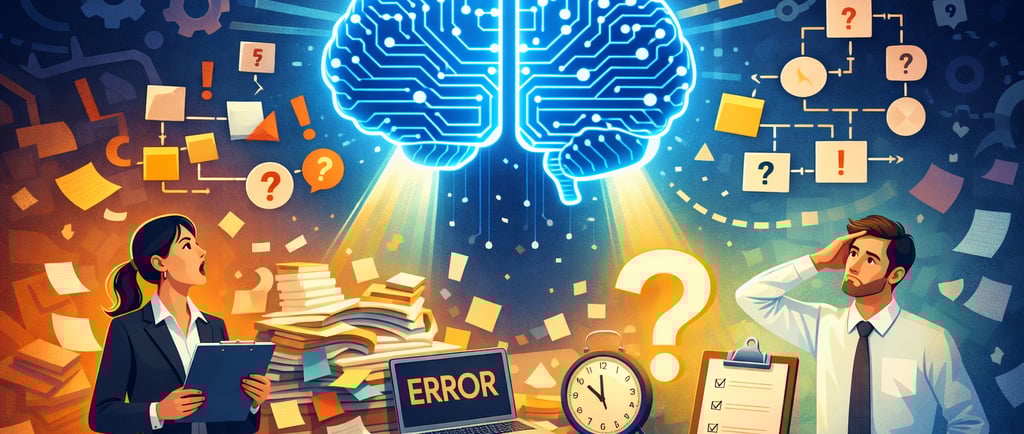
When we talk about AI in the workplace, it’s easy to get caught up in the promise of automation and quick wins. But I’m starting to see something deeper happening. AI isn’t just a tool to speed things up or cut costs. It’s becoming a mirror, one that shows us the cracks we often overlook in how our organizations function.
This becomes clear when AI struggles to answer questions or fit smoothly into the flow of work. It’s tempting to blame the technology. But what if those struggles aren’t failures of AI at all? Instead, they might be revealing uncomfortable truths about where knowledge is stuck in people’s heads instead of being shared through clear systems and processes.
I’ve seen this many times. In companies both small and large, the places where AI hits a wall are the places where we’ve been ignoring or patching messy issues. For example, when AI can’t route tasks correctly, it’s often because roles and responsibilities aren’t clearly defined or documented. When it can’t answer questions, it’s because information hasn’t been captured in a way everyone can access. These are problems many organizations tolerate because they are hard to fix and because people have figured out workarounds that only they understand.
Resisting AI in these moments feels natural. It’s uncomfortable to see what we’ve been sweeping under the rug suddenly spotlighted. Accepting AI as a mirror means facing those gaps head-on—and that’s not always easy. But that discomfort also holds opportunity.
Instead of thinking of AI as a blunt instrument to force efficiency, what if we used it to rethink how work actually gets done? What if AI strategy became an excuse to redesign systems, clarify knowledge sharing, and build better support for people? When teams are involved in designing AI to work alongside them, it becomes less about replacement and more about collaboration.
This human-centered approach to AI recognizes that technology can’t fix underlying organizational issues on its own. It needs leadership willing to listen to those reflections and use them to strengthen trust, set clearer boundaries, and build sustainable growth. That means slowing down long enough to understand where the real work happens and where the gaps are.
When we lean into AI’s spotlight, we get to see our organizations more clearly. It’s an invitation to move from patchwork fixes toward more intentional, human-focused systems. The path won’t always be smooth, but it’s where the real opportunity lies—in learning, adapting, and growing together.
So I’m curious: has AI shown your organization some uncomfortable truths? What gaps has it highlighted? And how are you leaning into those moments to build something stronger? How are you navigating this reflection and growth?